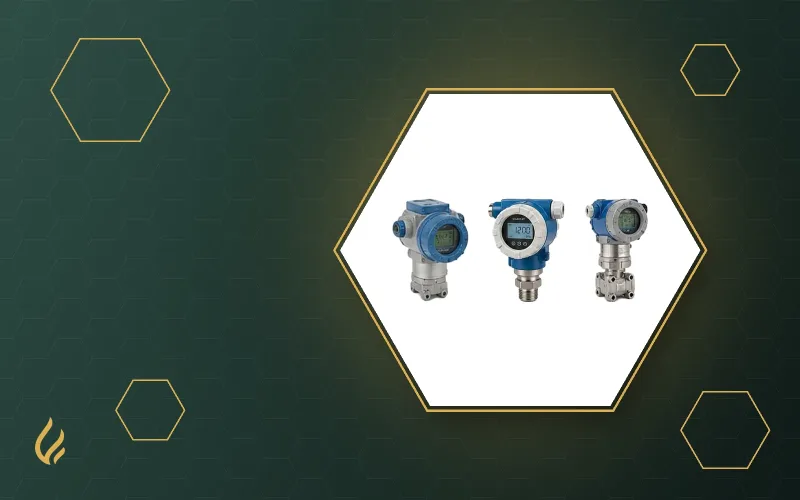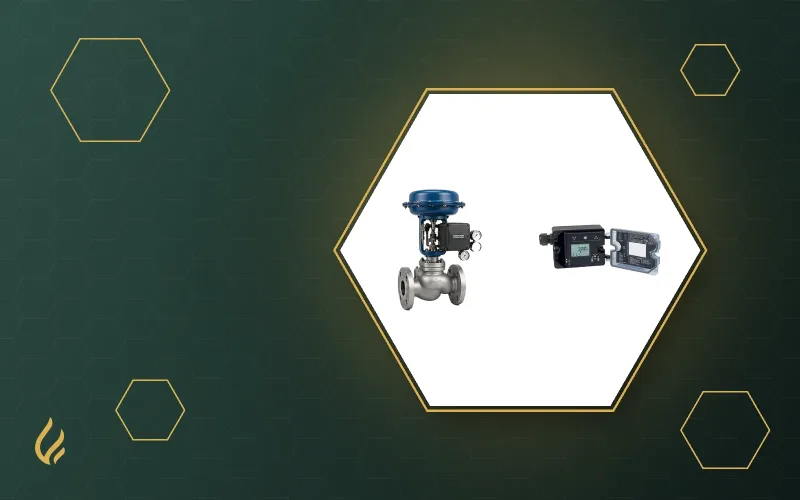



Accuracy, range, response time, stability and cost: the five criteria that decide between a thermocouple and a PT100 — plus tips on thermowells and transmitters.
Temperature is the most frequently measured variable in industry, and almost every measuring point uses one of two technologies: the thermocouple or the resistance temperature detector (RTD), most commonly the PT100. Both are mature and reliable, but choosing correctly between them directly affects accuracy, cost and service life.
Operating principles
A thermocouple consists of two dissimilar metals welded at one point; the temperature difference between the hot junction and the cold end generates a microvolt-level voltage. A PT100 is a platinum resistor with exactly 100 ohms at 0 °C whose resistance rises almost linearly with temperature.
Comparison on five criteria
| Criterion | PT100 (RTD) | Thermocouple |
|---|---|---|
| Temperature range | -200 to about +600 °C | -200 to +1700 °C (type dependent) |
| Accuracy | High; class A about ±0.15 °C at 0 °C | Moderate; type K class 1 about ±1.5 °C |
| Long-term stability | Excellent | Moderate; drifts at high temperature |
| Response time | Moderate | Fast (especially grounded junction) |
| Vibration resistance | Moderate | High |
Common thermocouple types
- Type K (NiCr/NiAl): general purpose and most widely used; up to about 1200 °C
- Type N: better stability than K at high temperature
- Type J: reducing atmospheres up to about 750 °C
- Type T: low and cryogenic temperatures
- Types R, S and B (Pt/Rh): very hot furnaces, glass and steel up to 1700 °C
Which one should you choose?
Choose a PT100 below roughly 500 °C when accuracy and stability matter — reactor temperature control, custody transfer, food and pharma, and machine bearings. Choose a thermocouple for high temperatures (furnaces, stacks, cement kilns), when fast response is needed or where vibration is severe.
The role of thermowells and transmitters
A bare sensor is not enough for process service. A thermowell protects the sensor from pressure, erosion and corrosion and allows replacement without shutting down; at high fluid velocities a wake-frequency calculation to ASME PTC 19.3 TW is mandatory. A temperature transmitter converts the weak sensor signal into a noise-immune, isolated 4–20 mA signal and adds sensor diagnostics and dual-input backup.
Common mistakes
- Using plain copper cable instead of thermocouple extension cable
- 2-wire PT100s over long distances, adding lead-resistance error
- Insufficient immersion length causing stem-conduction error
- Selecting thermowells without checking vibration in high-velocity flow
Frequently asked questions
Is a PT1000 better than a PT100?
A PT1000 has a higher base resistance, so lead resistance matters less; it suits 2-wire connections and battery-powered devices, but 3- or 4-wire PT100s remain the process-industry standard.
How can thermocouple accuracy be improved?
Use class 1 elements, the right extension cable, a transmitter with accurate cold-junction compensation and periodic calibration against a reference sensor.
Hamoon supplies temperature sensors, thermowells and transmitters from WIKA, Endress+Hauser, Rosemount, ABB and others as matched packages. Contact us for advice and a quotation.
Products mentioned in this article
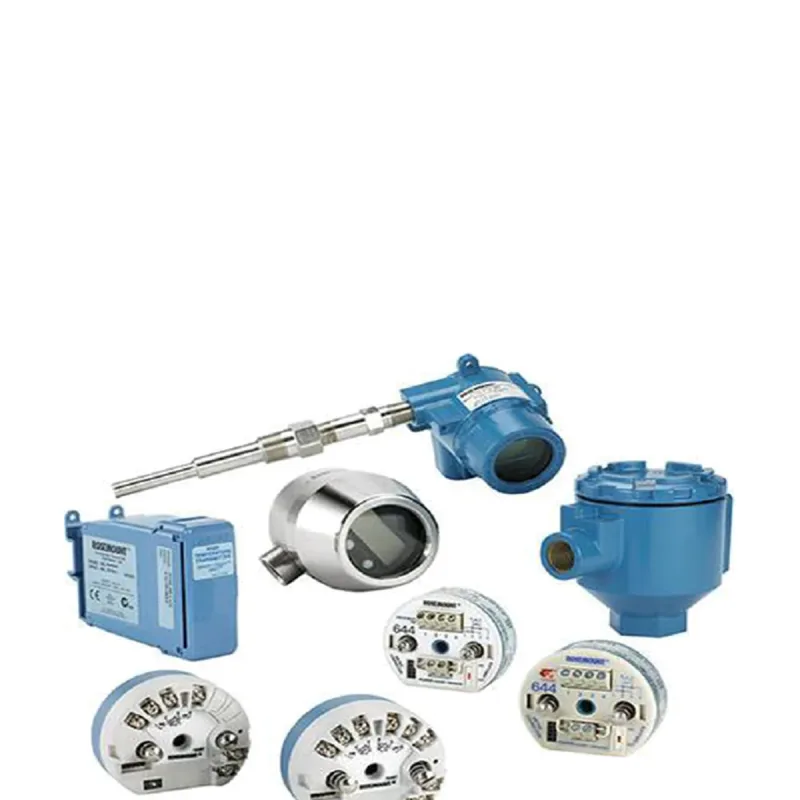
Temperature Transmitter
Head-mounted and DIN-rail temperature transmitters accepting RTD and thermocouple inputs, providing accurate, isola...
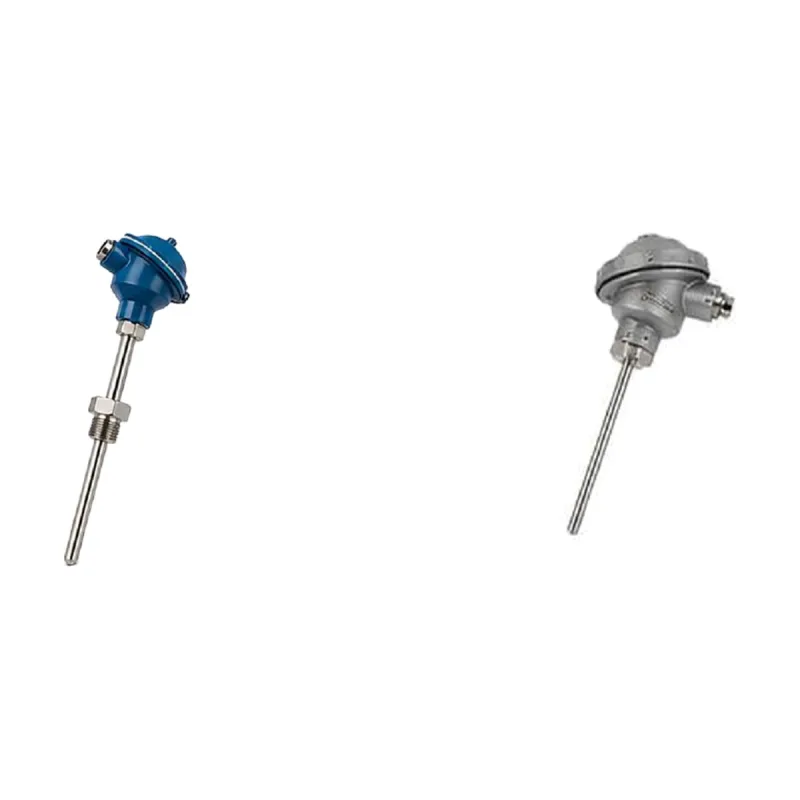
Industrial Thermocouples & RTD Assemblies
Industrial thermocouple and RTD assemblies with connection heads, sheaths and thermowells in types J, K, N, R, S an...
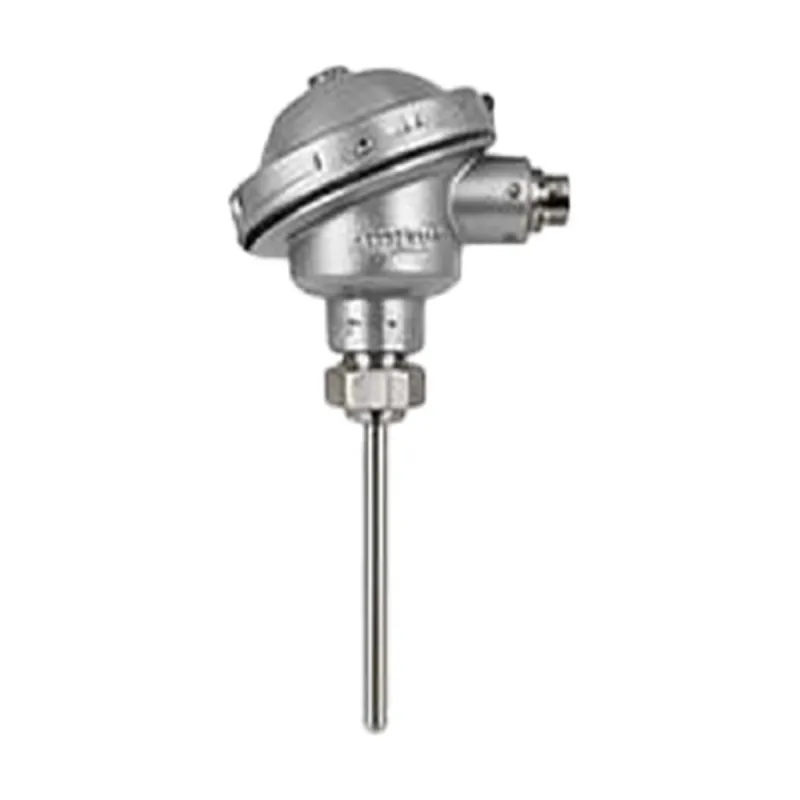
PT100 RTD Sensor with Thermowell & Head
PT100 resistance temperature detectors complete with thermowell and connection head, offering high accuracy and rep...