

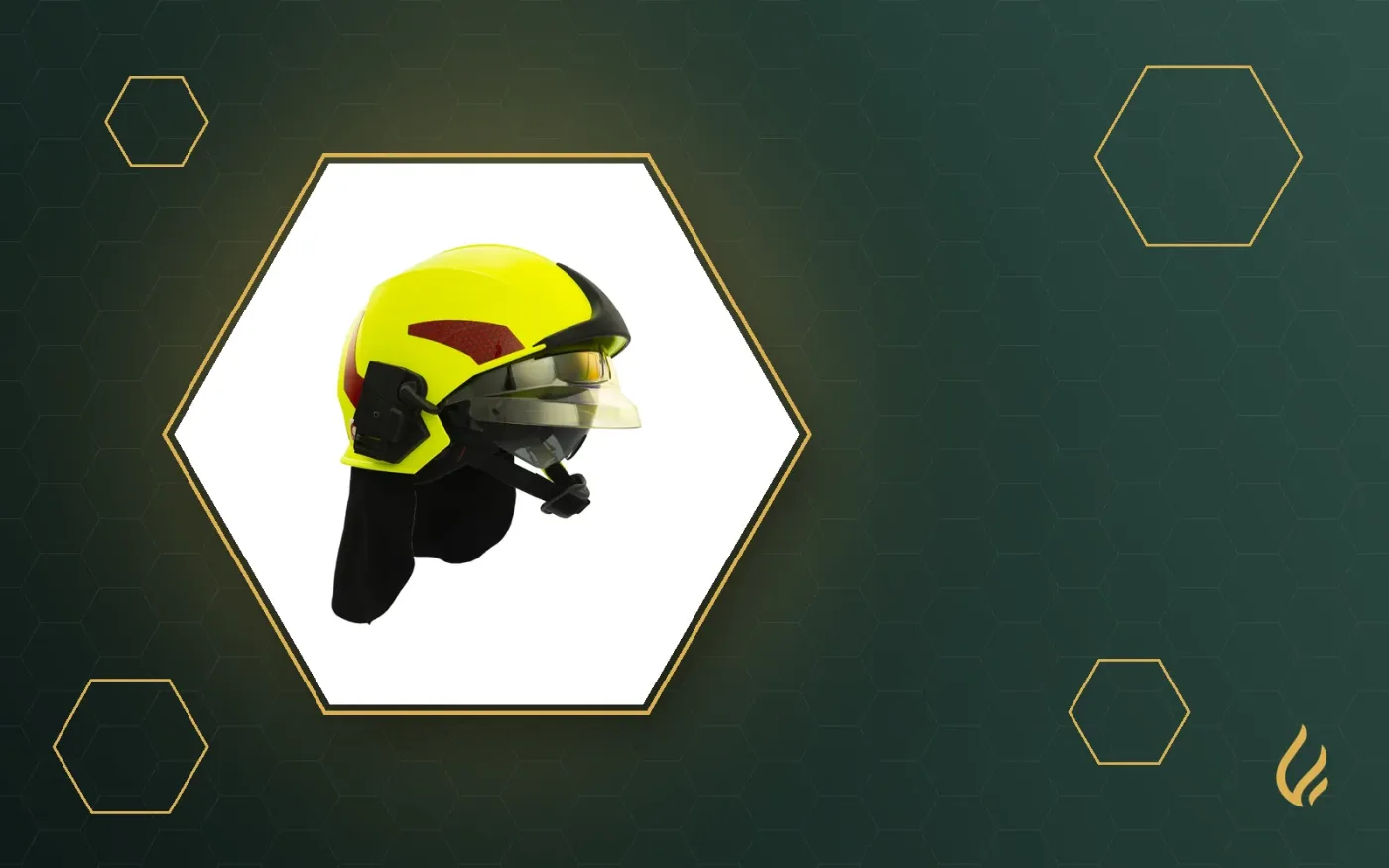
VULCAN NEO is a smart firefighting helmet with an integrated, ATEX-certified thermal camera module, certified to a comprehensive set of European standards including EN 443.
In a smoke-filled building or a burning process unit, visibility can drop to almost zero within seconds. Firefighters need to find casualties, locate the seat of the fire and identify hidden hot spots, all while keeping both hands free for hose lines, tools and rescue work. The VULCAN NEO smart firefighting helmet addresses this challenge by combining a certified firefighting helmet with an integrated thermal camera module.
What makes VULCAN NEO a smart helmet?
Thermal imaging cameras have become an essential tool for fire services and industrial fire brigades. Traditionally they are handheld, which occupies one of the firefighter's hands and means the camera must be passed between team members. VULCAN NEO integrates the thermal camera module into the helmet itself, giving the wearer hands-free thermal vision in the direction they are looking.
The thermal camera module is ATEX-certified, an important consideration for industrial fire teams who may operate in or near potentially explosive atmospheres in refineries, gas plants and petrochemical complexes.
Benefits of an integrated thermal camera
- Seeing through smoke: thermal imaging detects heat signatures rather than visible light, helping firefighters navigate in dense smoke.
- Faster search and rescue: casualties can be located more quickly, even in complex or unfamiliar layouts.
- Locating the fire and hot spots: crews can identify the seat of the fire, heat behind walls and ceilings, and hot surfaces on tanks and pipework.
- Hands-free operation: both hands remain available for hose lines, tools and casualty handling.
- Better situational awareness: crews can assess fire development and plan their movements more safely.
Why thermal imaging matters in industrial fires
Fires in oil, gas and petrochemical facilities differ from building fires. Hydrocarbon pool fires and jet fires produce intense radiant heat, and neighbouring tanks, vessels and pipe racks must be cooled to prevent escalation. Thermal imaging helps crews check whether cooling water is reaching the right surfaces, see the product level inside storage tanks from the temperature difference on the shell, and find remaining hot spots during overhaul that could lead to re-ignition. With this capability built into the helmet, every firefighter equipped with VULCAN NEO can carry out these checks without waiting for a handheld camera.
Certified to a comprehensive set of European standards
Protective equipment for firefighters must be independently tested. VULCAN NEO complies with the following standards:
| Standard | Scope |
|---|---|
| EN 443:2008 | Helmets for firefighting in buildings and other structures |
| EN 16471:2014 | Firefighters' helmets for wildland firefighting |
| EN 16473:2014 | Firefighters' helmets for technical rescue |
| EN 50365:2002 | Electrically insulating helmets for use on low-voltage installations |
| EN 14458:2018 | Face shields and visors for firefighters' and high-performance industrial safety helmets |
| EN 166:2001 | Personal eye protection: general specifications |
| EN 170 / 171 / 172 | Ultraviolet, infrared and sunglare filters |
The helmet is approved by CSI S.p.A, an Italian testing and certification body, and by CNBOP-PIB, Poland's Scientific and Research Centre for Fire Protection. This breadth of certification makes VULCAN NEO suitable for structural firefighting, wildland fires, technical rescue and work near low-voltage electrical installations.
Who is VULCAN NEO for?
- Industrial fire brigades at oil, gas and petrochemical facilities
- Fire stations at power plants, steel mills, cement plants and mines
- Municipal fire services and rescue teams
- Emergency response teams (ERT) at large industrial complexes
Training and using thermal images effectively
A thermal camera is a powerful tool, but it does not replace standard search techniques and operational training. Firefighters should learn to interpret thermal images: for example, shiny metal and glass surfaces can reflect heat, and water or steam can mask the true thermal pattern. Regular drills with the helmet in realistic scenarios, together with inspection and maintenance according to the manufacturer's instructions, help teams get the most from this technology.
Complete the protection
A helmet is only one part of a firefighter's protective ensemble. For full protection, combine it with firefighter suits to EN 469, firefighting gloves to EN 659, boots to EN 15090 and self-contained breathing apparatus to EN 137. Make sure all components are compatible; for example, the helmet must work properly with the SCBA face mask and the collar of the firefighter suit.
Request a VULCAN NEO quotation
Hamoon supplies the VULCAN NEO smart firefighting helmet together with firefighter suits and other firefighting equipment. Contact our HSE team for a product presentation, technical documents and a quotation tailored to your fire brigade.
Products mentioned in this article
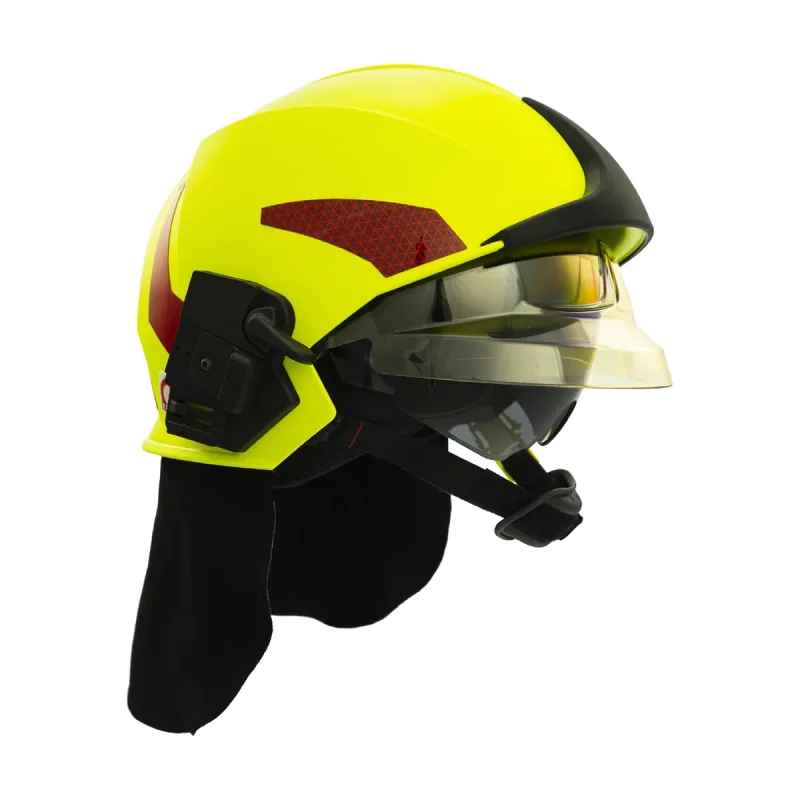
VULCAN NEO Smart Firefighting Helmet
A smart firefighting helmet with an ATEX-certified thermal imaging camera module — advanced PPE approved by CSI S.p...
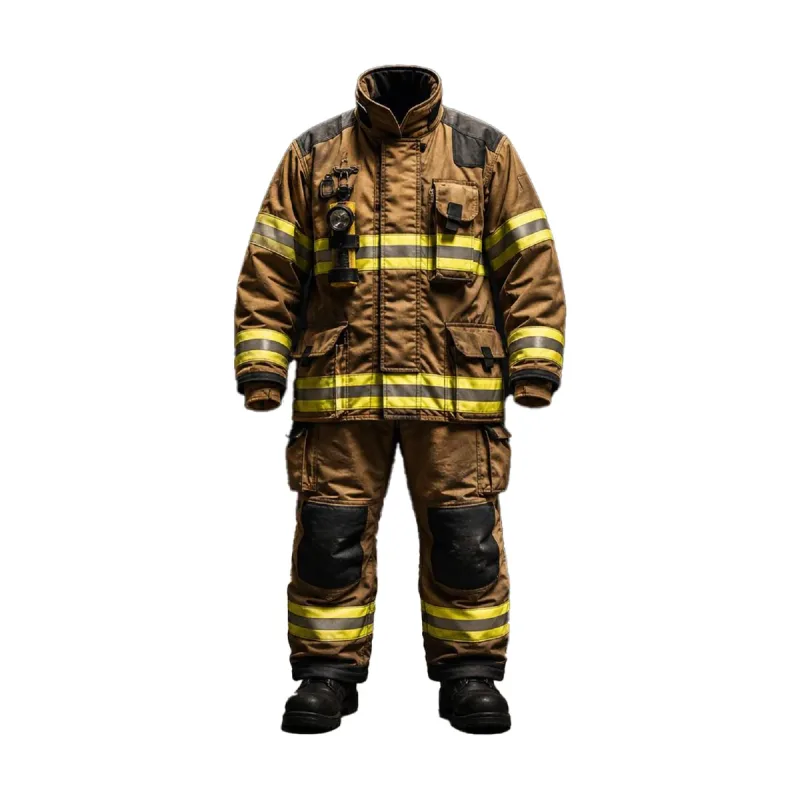
Firefighter Turnout Suit
Multi-layer structural firefighting turnout gear with flame-resistant outer shell, moisture barrier and thermal lin...