


Lockout/Tagout ensures that equipment cannot start up unexpectedly during maintenance. Learn about hazardous energy sources, the LOTO procedure step by step and the devices you need.
Many serious injuries during maintenance happen not because equipment is faulty, but because it starts up, moves or releases stored energy while someone is working on it. Lockout/Tagout (LOTO) is a structured procedure that ensures machines and process equipment are isolated from all energy sources and cannot be re-energised until the work is complete. It is one of the most important safe work practices in any industrial plant.
What is Lockout/Tagout?
Lockout means physically securing an energy-isolating device, such as a circuit breaker, disconnect switch or valve, in the safe position with a lock so that it cannot be operated. Tagout means attaching a durable warning tag that identifies who applied it, why and when. Locks provide physical protection; tags communicate information. Wherever an isolation point can accept a lock, lockout should be used, with tagout as a supplementary measure.
Key international references include the US OSHA standard 29 CFR 1910.147, The Control of Hazardous Energy, and ISO 14118 on the prevention of unexpected start-up of machinery. Many companies integrate these requirements into their own permit-to-work systems.
Hazardous energy sources
- Electrical: power circuits, control circuits and energy stored in capacitors
- Mechanical: rotating shafts, flywheels and compressed springs
- Hydraulic and pneumatic: pressurised oil and air in lines, cylinders and accumulators
- Process energy: pressurised, hot or toxic fluids in pipes and vessels
- Thermal: hot surfaces, steam and cryogenic fluids
- Gravitational: suspended loads, counterweights and elevated components
- Chemical: reactive or hazardous substances
Most equipment has more than one energy source; a pump, for example, may have electrical power, process pressure and residual heat at the same time.
The LOTO procedure step by step
- Prepare: identify all energy sources and isolation points using an equipment-specific procedure.
- Notify: inform operators and all affected personnel that the equipment will be shut down and locked out.
- Shut down: stop the equipment using its normal operating controls.
- Isolate: open breakers, close valves, insert blinds where required and disconnect every energy source.
- Apply locks and tags: each authorised worker applies their own personal lock and tag to every isolation point, or to a group lock box.
- Release stored energy: bleed pressure, drain lines, discharge capacitors, block or lower raised parts and allow hot equipment to cool.
- Verify isolation: attempt to start the equipment and test for the absence of voltage and pressure. Test before you touch.
- Perform the work in line with the permit and procedure.
- Restore: remove tools, reinstall guards, confirm all personnel are clear, and have each worker remove only their own lock before re-energising.
Golden rules of LOTO
- One person, one lock, one key: nobody works under another person's lock.
- LOTO locks must be dedicated safety padlocks, never used for any other purpose.
- A lock may only be removed by the person who applied it, except under a formal, controlled procedure.
- Shift changes and contractor work require a defined handover process.
Group lockout
For large jobs such as turnarounds, where many workers and numerous isolation points are involved, a group lockout is used. A responsible person locks each isolation point and places the keys in a group lock box; every worker then applies a personal lock to the box. The isolation cannot be removed until the last worker has removed their lock.
Essential LOTO devices
- Safety padlocks: often with non-conductive bodies, unique keys and colour coding by department or trade
- Lockout hasps: allow several workers to lock a single isolation point
- Circuit breaker and switch lockouts for electrical panels
- Valve lockouts for gate, ball and butterfly valves
- Plug lockouts and cable lockouts for awkward or multiple isolation points
- Danger tags made of durable, tear-resistant material
- Group lock boxes and lockout stations for complex isolations and organised storage
Ready-made LOTO kits combine the most common devices in a portable case, so maintenance teams always have the right equipment at hand.
Building a LOTO programme
A successful LOTO programme is more than buying locks and tags. Its core elements are equipment-specific procedures, training for authorised and affected employees, periodic audits of how procedures are applied, and reviews after any incident. Signs at isolation points and standardised lock colours and types also make LOTO easier to apply and reduce errors.
Source LOTO equipment from Hamoon
Hamoon supplies lockout/tagout devices and complete LOTO kits for electrical, mechanical and process isolation. Contact our safety specialists for guidance on selecting the right devices for your site and request a quotation.
Products mentioned in this article
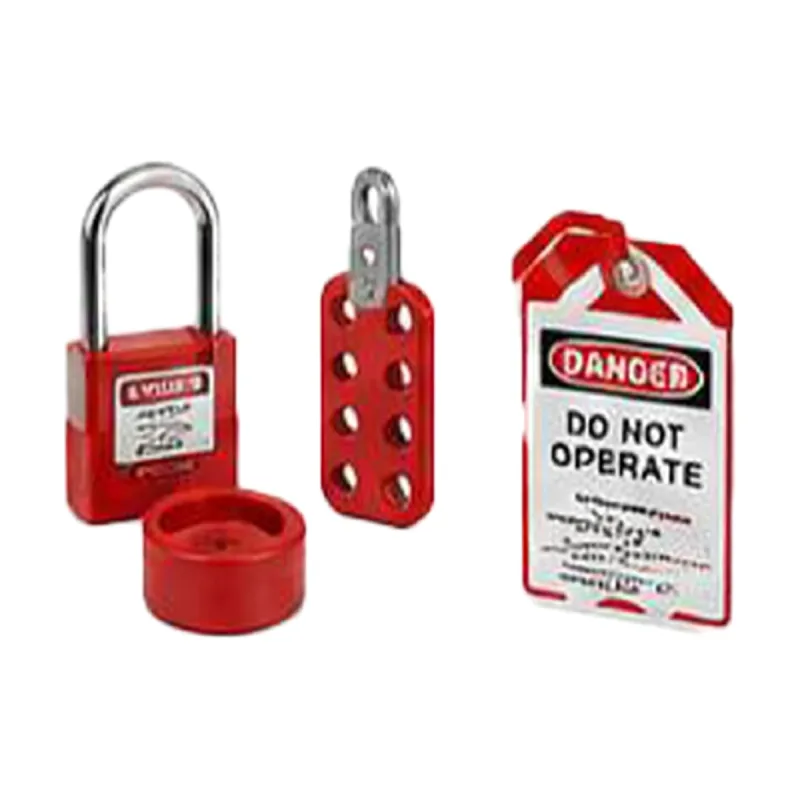
Lockout/Tagout (LOTO) Kit
Complete lockout/tagout (LOTO) kits with safety padlocks, multi-user hasps, breaker and valve lockouts and danger t...