

Magmeters use Faraday's law to measure conductive liquids with no moving parts. Learn the working principle, the key installation rules and how to choose liner and electrode materials.
Electromagnetic flowmeters, often called magmeters, are among the most reliable instruments for measuring the flow of conductive liquids. With no moving parts and no obstruction in the pipe, they are widely used for water and wastewater, chemicals, slurries and cooling water in petrochemical, steel, cement, mining and power plants. Understanding how they work, and how to install them correctly, is the key to accurate, trouble-free measurement.
Working principle: Faraday's law of induction
A magmeter is based on Faraday's law of electromagnetic induction: when a conductor moves through a magnetic field, a voltage is induced across it. In a flowmeter, the conductive liquid itself is the conductor. Coils mounted on the measuring tube create a magnetic field perpendicular to the flow, and two electrodes on opposite sides of the tube pick up the induced voltage.
The induced voltage is proportional to the magnetic field strength (B), the average flow velocity (v) and the distance between the electrodes (D): U = k × B × v × D. Because B and D are constant for a given meter, the signal is directly proportional to velocity, and multiplying the velocity by the internal cross-sectional area of the tube gives the volumetric flow rate.
Modern magmeters use pulsed DC excitation of the coils, which compensates for electrochemical noise at the electrodes and provides a stable zero point.
Advantages and limitations
- No moving parts and no pressure drop
- Measurement unaffected by density, viscosity, temperature and pressure within the meter's ratings
- Bidirectional measurement and wide turndown
- Suitable for corrosive liquids and abrasive slurries when the right materials are selected
The main limitation is that the fluid must be electrically conductive. Many standard meters need a minimum conductivity of around 5 µS/cm, although special designs work at lower values. Magmeters cannot measure gases, steam or hydrocarbons such as crude oil and fuels, and demineralised water may also fall below the conductivity limit.
Installation tips for accurate measurement
1. Keep the pipe full
A partially filled pipe causes large errors. Install the meter in a vertical pipe with upward flow, or at a low point in a horizontal line. Avoid the highest point of a pipeline, where air collects, and the section directly upstream of a free discharge.
2. Provide straight pipe runs
Elbows, valves, pumps and reducers distort the flow profile. A common recommendation is at least 5 × DN of straight pipe upstream and 2 × DN downstream, but always follow the manufacturer's installation manual. Where possible, install control valves downstream of the meter.
3. Orient the electrodes correctly
In horizontal pipes, mount the meter so that the electrode axis is horizontal. This prevents air bubbles at the top of the pipe and sediment at the bottom from insulating the electrodes.
4. Ground the meter properly
The meter body and the fluid must be at the same electrical potential. In unlined metal pipes, connect the meter body to the pipe flanges. In plastic or internally lined pipes, use grounding rings or a meter with a reference electrode. Pipes with cathodic protection require special isolation measures, so consult the manufacturer before installation.
5. Protect the liner
Avoid installing the meter on the suction side of a pump, where vacuum can damage some liners, and never weld close to the meter body.
Selecting liner and electrode materials
| Liner material | Typical applications |
|---|---|
| PTFE / PFA | Chemicals, acids and alkalis, high temperatures |
| Hard or soft rubber | Water, wastewater and mildly abrasive slurries |
| Polyurethane | Highly abrasive slurries in mining and cement plants |
| Ceramic | Abrasive media and high-temperature service |
Electrode materials must also suit the fluid: 316L stainless steel for water and general service, Hastelloy C for many corrosive media, and titanium, tantalum or platinum for highly aggressive chemicals.
Compact or remote transmitter?
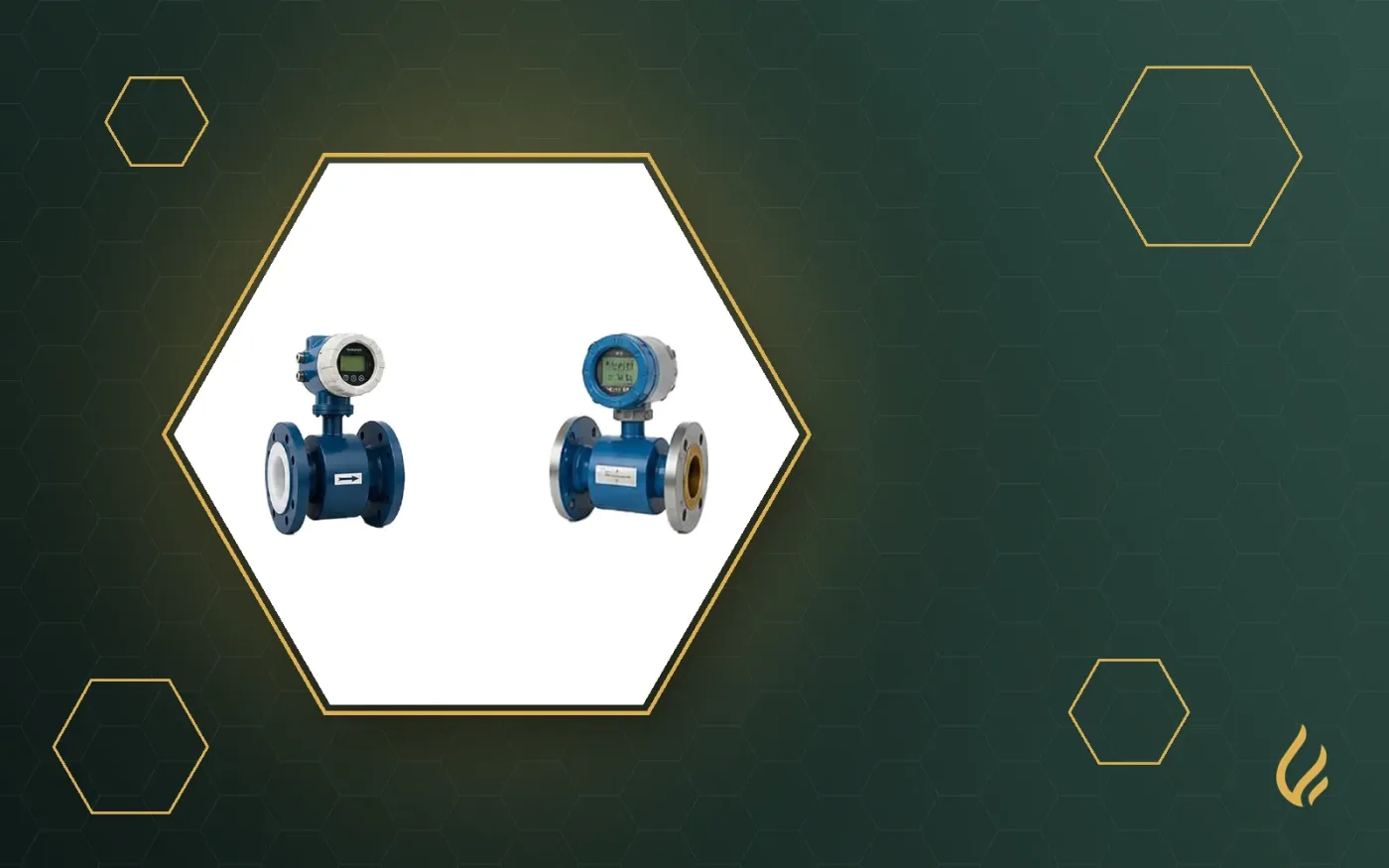
A compact version mounts the transmitter directly on the sensor, which simplifies installation. A remote version is preferred where the measuring point is hard to access, exposed to strong vibration or high temperature, or at risk of flooding. For low-conductivity fluids, keep the cable between sensor and transmitter within the length specified by the manufacturer.
Get the right magmeter for your process
Hamoon supplies electromagnetic flowmeters from brands such as Endress+Hauser, Siemens, ABB, Yokogawa and Rosemount. Send us your fluid data, pipe size and flow range, and our engineers will recommend a suitable model and provide a quotation.
Products mentioned in this article
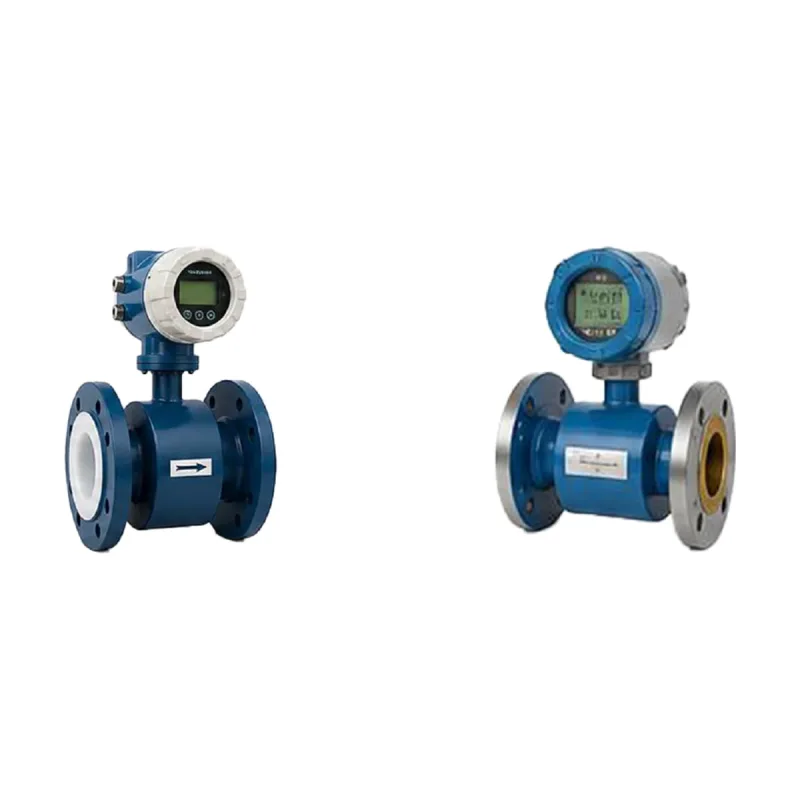
Electromagnetic Flowmeter (Magmeter)
Electromagnetic flowmeters for accurate measurement of conductive liquids such as water, wastewater, slurries and c...